
ARTICL3 is for men who know why they own what they own, not those who define themselves by where they shop.
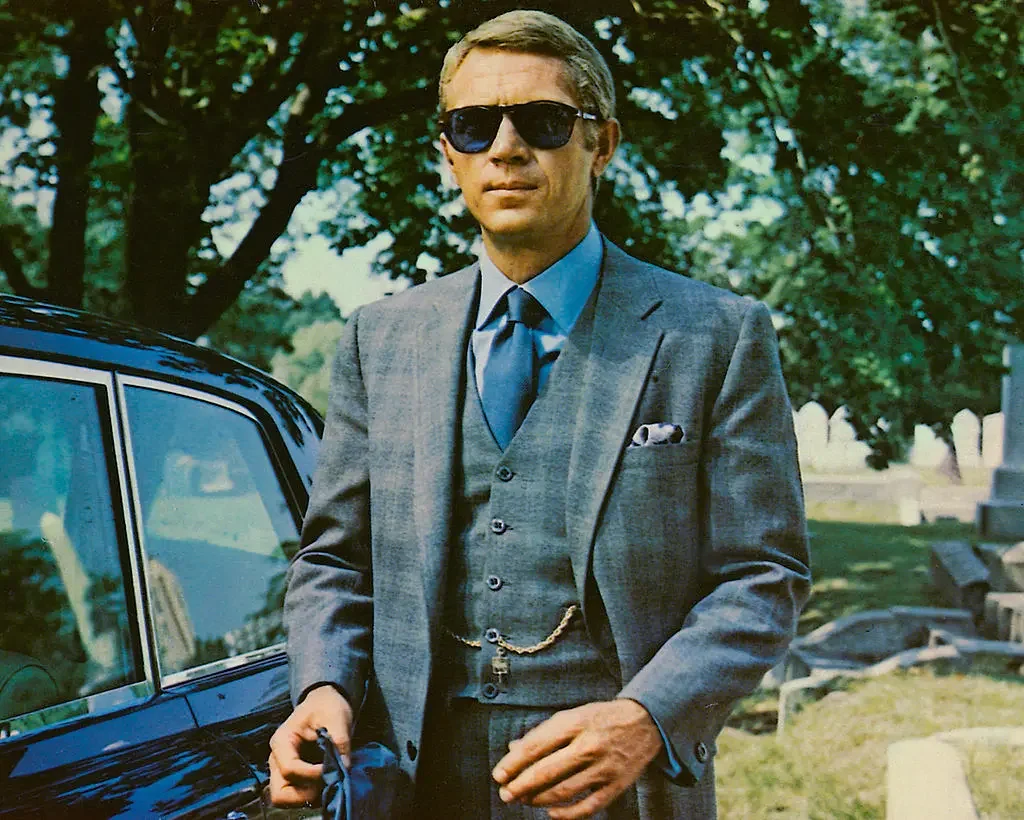
Steve McQueen in 'The Thomas Crown Affair.' Via Silver Screen Collection/Getty
Published: Aug 13, 2026, 06:00 PM ET
Updated:Aug 13, 2026, 07:19 PM ET
Ask a man how he shops and he’ll describe where he shops: A store, a website, a brand he trusts. Ask him how he decides, and the conversation stops. He doesn’t have an answer because, for most men, shopping was never a decision. It was a surrender to whatever stood in front of them, dressed up afterward as taste. That’s assuming he’s shopping for himself at all; increasingly, he isn’t.
This wasn’t always true. A generation or two ago, a man bought clothing through a relationship — a haberdasher, a tailor, a shopkeeper who had watched him for years and knew what he needed before he did. The judgment wasn’t his alone. It was shared, inherited, checked against someone whose entire business was not selling him the wrong thing twice. That relationship did something quietly important — it gave a man a filter he didn’t have to build himself.
Beyond the filter, the acquisition of clothing was an experience. It was his time — it was about him. He could talk through what was on his mind, work through whatever he was facing, and socialize not just with the man fitting his suit but with whoever else happened to be in the shop that day. Shopping like this was never just acquisition. It was discovery, a way of pushing himself a little further. Today, that relationship has been replaced by a transaction. The salespeople and store owners who once served as advisors now function as clerks.
That filter is gone. What replaced it is not more freedom but more noise — infinite inventory, recommendation engines, a hundred open tabs, each less relevant than the last. The modern man doesn’t lack access to clothing. He lacks the one thing access can’t buy: a standard. He has lost the art of acquisition. So he shops the way he does most things now that no one is watching — reactively, occasionally well, mostly by accident. Most stores are stocked with overpriced brands that mistake price and country of origin for luxury.
The mistake is simple: Higher prices and recognizable brands are assumed to equal taste. They don’t. Taste is what you like. Buying well is a discipline, closer to underwriting than to art. It asks a narrower, harder question — not “Do I like this?” but “Does this belong in a life I’ve already decided to live?” Most men skip that second question entirely, because answering it requires having decided something about the life first. It’s easier to let the store, or whatever brand he aspires to own, decide for him and call the result personal style. The result is a wardrobe that never produces real style, let alone authenticity.
The cost isn’t financial. It’s the closet with forty shirts and nothing to wear — a wardrobe built from forty separate moments of low resistance rather than one coherent point of view. Each piece made sense in isolation: in the fitting room, under the lighting, against the mood of a particular Tuesday. None of them were ever asked to answer to anything beyond that Tuesday. A wardrobe built this way isn’t a failure of money or effort. It’s a failure of criteria — the absence of a standard a purchase has to clear before it’s allowed in.
Building that standard isn’t complicated, but it is work. Most men avoid it because it happens before the shopping, not during it. It means knowing, in advance, what you’re actually dressing for, and being honest about it rather than aspirational. It means being able to name, without a salesman’s help, why a garment earns its place: Because it will still make sense in five years, because it was made by someone who couldn’t afford to make it carelessly, because it does something your existing wardrobe doesn’t already do. Absent that standard, every purchase is just an opinion formed under fluorescent light and defended after the fact.
This is, in the end, a question of authority — who is actually making the decision? A man who has done the work beforehand walks into a shop already knowing what he’s looking for and, more usefully, what he isn’t. He is difficult to sell to, in the way anyone with a standard is difficult to sell to. A man who hasn’t done that work is easy. Show him enough options and choosing any of them starts to feel like a choice. That isn’t shopping. That’s exhaustion, dressed up as decision-making.
We’ve just opened our flagship store at 236 Elizabeth Street, just south of Houston. We have minimal interest in selling you more clothing. Instead we’re offering a chance to go back in time and build a wardrobe where every piece has a purpose and a clear intention. We call it the 2-2-4 System: a scientific approach to constructing a wardrobe around a standard. Two jackets, two pants, four shirts, a foundation that trades outfits for a signature look. Paired with a sneaker, a loafer, and a boot, these few pieces yield 48 distinct looks — not outfits — but looks that make it clear you’re a man who knows what he’s doing, even if you don’t.
ARTICL3, named for Eisenhower’s Executive Order 10631, embraces the essence of masculinity: Never stop striving, never leave a man behind, never take a shortcut or a special favor. These are pillars most men have forgotten. But in this lower-level bunker, a man gets to shop the way his grandfather did. A collection of ready-to-wear, refined casualwear, and custom tailoring gives a man exactly what he needs — and nothing he doesn’t.
The men who dress with real authority are rarer than the menswear industry would have you believe. They aren’t the ones with the largest wardrobes or the latest knowledge of what’s trending. They’re the ones who can tell you, plainly, why they own what they own. Not because someone told them to. Because they decided, once, what they were building, and everything since has had to answer to that.
Vivek Nagrani is Founder and Creative Director of ARTICL3.